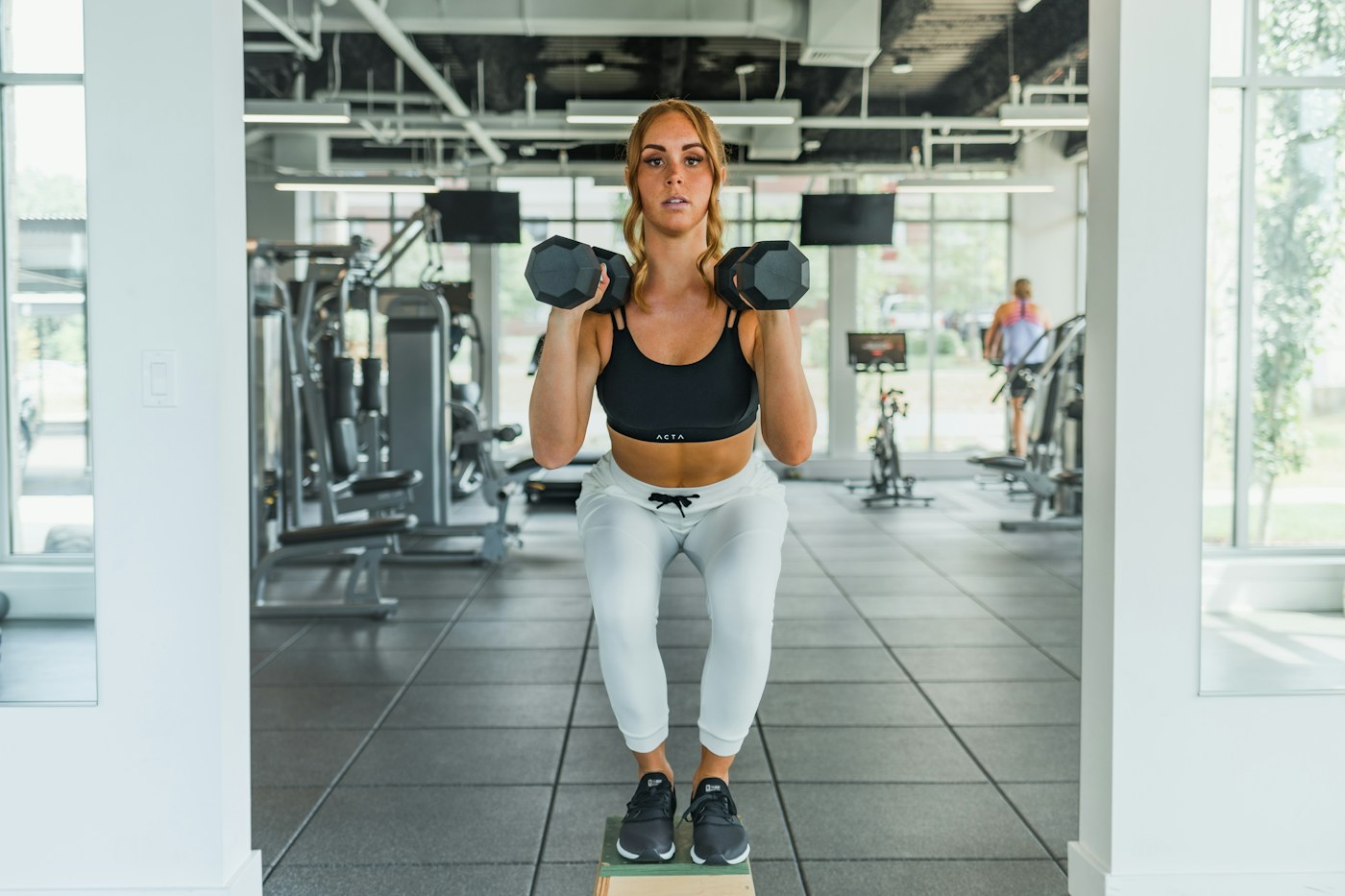
A pair of dumbbells can train your legs, chest, back, shoulders and arms without a full gym. This plan uses a few basic movement patterns and gives you a clear way to make the work harder as you improve.
You do not need a room full of machines to build a useful strength routine. Dumbbells are flexible, easy to store and let each arm or leg work on its own. A small range of weights can cover many exercises, especially when you choose movements that train more than one muscle at a time.
The plan below is for a generally healthy adult who can exercise safely. Start with weights you can control. If you have an injury, a health condition or a long break from exercise, get advice from a qualified health professional before you begin.
The workout
Do this full-body session two or three times per week, with at least one easier or rest day between hard sessions. Begin with five minutes of easy movement and a few light practice repetitions. Then complete the following exercises in order:
- Goblet squat: 3 sets of 8 to 12 repetitions.
- Dumbbell Romanian deadlift: 3 sets of 8 to 12 repetitions.
- Dumbbell floor press: 3 sets of 8 to 12 repetitions.
- One-arm dumbbell row: 3 sets of 8 to 12 repetitions per side.
- Standing dumbbell overhead press: 2 sets of 8 to 12 repetitions.
- Suitcase carry: 2 carries of 20 to 40 seconds per side, if you have a clear path.
Rest around two minutes after the harder leg and upper-body sets. Take more time if you need it to regain control and breathe normally. For smaller exercises, one to two minutes may be enough. You do not have to rush from one movement to the next.
How to do each movement
Goblet squat: Hold one dumbbell close to your chest. Stand with your feet about shoulder-width apart. Sit down between your hips as far as you can while keeping your balance and control. Push through your feet to stand. Use a chair or bench as a depth guide if that helps.
Romanian deadlift: Hold a dumbbell in each hand in front of your thighs. Soften your knees and push your hips back as the weights travel down your legs. Keep your back steady and stop when you feel a stretch in the backs of your legs. Stand by bringing your hips forward; do not yank the weights upward.
Floor press: Lie on the floor with a dumbbell in each hand. Keep your wrists over your elbows and lower your upper arms until they touch the floor gently. Press the weights up without bouncing your elbows off the floor.
One-arm row: Place one hand on a sturdy bench or chair and brace your body. Pull the dumbbell toward your hip while keeping your shoulder away from your ear. Lower it under control. Complete the same number of repetitions on each side.
Overhead press: Stand tall and hold the weights near your shoulders. Tighten your midsection and press the dumbbells up without leaning far back. Lower them slowly. If your shoulders feel uncomfortable, use a lighter load, shorten the range or replace this exercise with a floor press.
Suitcase carry: Hold one dumbbell at your side and walk slowly without leaning toward or away from it. Turn around safely and switch hands. Skip the carry if there is no clear, non-slip path.
Pick the right dumbbells
The correct weight lets you finish your target repetitions with steady technique. The final few reps should feel challenging, but you should not have to swing, twist or hold your breath for a long time to complete them.
Choose a lighter weight for movements that feel new, especially the hip hinge and overhead press. If you reach the top of the repetition range easily across all sets, move to the next available weight. If you cannot reach the bottom of the range with control, use lighter dumbbells or an easier version.
Adjustable dumbbells save space and offer smaller weight increases. Fixed dumbbells are quick to change between exercises, but a large jump between pairs can make progression difficult. If you own only one pair, you can still make progress by adding repetitions, improving control or choosing a harder variation.
How to progress week by week
Use a simple double-progression method. First, keep the same dumbbell weight and gradually add repetitions while staying inside the listed range. When you can complete 12 good reps on every set, increase the weight slightly and return to about 8 reps. Build up again over the next sessions.
For example, you might do 8, 8 and 7 goblet squats in the first workout. The next time, aim for one more repetition across the sets. Do not force the increase if your range of motion or balance gets worse. Repeat the same weight until it feels controlled.
Write down the weight and repetitions after each session. A basic note on your phone is enough. Tracking removes guesswork and helps you see whether the plan is moving forward.
If you have limited equipment
If your weights are light, use a single-leg or split-stance version of a leg movement, pause briefly at the hardest point or lower the weight more slowly. Keep the movement smooth; making each repetition extremely slow is not required.
If you have only one dumbbell, hold it with both hands for squats and deadlifts, and use one arm at a time for rows and presses. Keep the number of sets similar on each side. If you have no safe way to perform an exercise, choose a movement you can do with control instead of improvising with unstable furniture.
Fit the plan into a normal week
Two weekly sessions are enough to practise the main movements and build a routine. For example, train on Monday and Thursday. If you do three sessions, keep at least one easier day between them and reduce the work if you still feel unusually tired.
You can shorten the workout by doing two sets of each movement or leaving out the carries. Keep the squat, hip hinge, push and pull patterns if time allows. A shorter plan you can repeat is more useful than a complicated routine you often skip.
Stop an exercise if it causes sharp pain, dizziness or unusual shortness of breath. Normal muscle effort is expected; sudden or worsening symptoms deserve attention. A good home session should challenge you while leaving enough energy to recover and train again.