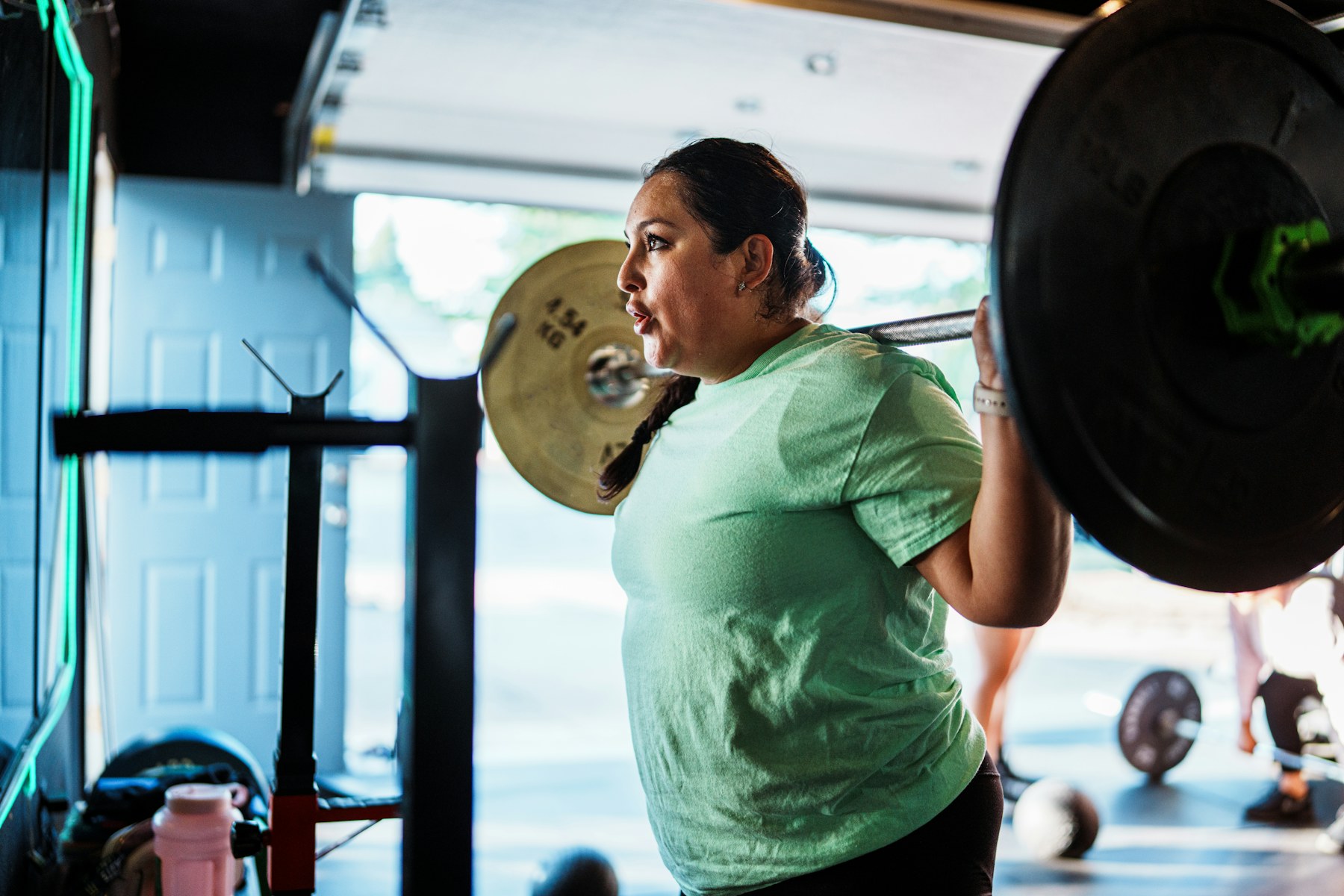
Weekly set volume is the amount of challenging strength work you do for a muscle over seven days. More work can help build muscle, but the benefit does not rise forever. Start with a repeatable amount, track your performance and add sets only when you have a clear reason.
If you want to build muscle, you may have seen advice to do a certain number of sets for every muscle each week. These numbers can be useful starting points, but they are not laws. The best amount depends on your experience, exercise choices, effort and recovery.
Training research generally finds that higher weekly resistance-training volume can produce greater muscle growth on average. It also shows diminishing returns: each extra set tends to add less benefit than the earlier sets, and very high workloads can be hard to recover from. That is why the goal is enough useful work, not the most work possible.
What counts as a set?
A working set is a group of repetitions that is challenging enough to make the target muscles work. Warm-up sets with light weights usually do not count. A set that ends far from effort may contribute less than a hard, controlled set.
For practical tracking, count sets where you finish with roughly one to four good repetitions left. You do not need to reach failure every time. The last repetition should still look controlled; if your form changes sharply, the set has gone far enough.
Compound exercises work more than one muscle. A chest press trains the chest and also uses the triceps and front shoulders. A row trains the upper back and involves the biceps. You can count the main target muscle as receiving a full set and treat the other muscles as receiving some extra work. Do not count every set as a full set for every muscle involved.
A reasonable place to start
For many healthy adults, starting around six to ten challenging sets per muscle group across the week is a practical range. Beginners can make progress with less, especially while learning technique. People with more training experience may need more work for some muscles, but they should add it gradually.
Think of this as a starting point, not a minimum requirement. If you are new, two full-body sessions with two sets of a squat, press and row already provide useful work. You do not need to add five isolation exercises because an online chart says your arms or shoulders are behind.
Spread work across two or more sessions when that makes the workouts easier to complete. If you want ten hard sets for a muscle, doing five sets on two days may feel better than doing all ten in one session. The split is mainly a way to manage effort and time. The weekly work and its quality matter more than a complicated schedule.
How to build your weekly plan
First, choose a small group of exercises you can perform consistently. Include movements that train the major muscle groups. Then write down how many hard sets you complete in each workout.
For example, a simple week might include:
- Monday: squat, chest press and row, each for three sets
- Thursday: hip hinge, overhead press and pulldown, each for three sets
- Saturday: a lighter full-body session with two sets for each movement
This is only an example. It gives you a way to count and spread the work; it is not a program everyone should copy. If your arms get plenty of work from pressing and pulling, you may not need several extra arm sets right away.
Track each muscle group that matters to your goal. Do not track every tiny muscle separately. A simple weekly note such as “chest: six direct sets plus pressing; legs: eight sets” is more useful than false precision.
Signs your volume may be too low
Low volume is not always a problem. If you are new, returning after a break or improving your lifts, your current plan may already be enough. Consider adding work only if your training is consistent, your technique is stable and progress has stopped for several weeks.
Before adding sets, check whether you are using the same range of motion, resting long enough and gradually improving the load or repetitions. If you are still adding repetitions over time, extra sets may not be needed.
If you do add volume, add one or two weekly sets to the target muscle, not several sets to every exercise. Keep the change for a few weeks and watch how you recover. If performance improves and you feel ready for the next session, the extra work may suit you.
Signs your volume may be too high
More is not better when it makes the next workout worse. Warning signs include repeated drops in performance, soreness that changes your movement, joints that stay irritated, or feeling drained before you begin each session.
One bad day does not prove that your plan is too hard. Look for a pattern. If the pattern continues, remove a few sets or reduce the load for a week. Keep your regular movement practice but leave more energy for recovery.
Also consider the rest of your life. A stressful week, poor sleep or a sudden increase in sport can make your normal training feel much harder. Adjusting your lifting workload for a short time is often wiser than trying to force every planned set.
Volume is only one part of muscle growth
Weekly sets do not guarantee results. You still need to perform the movements with control, choose loads that challenge you and make gradual progress. Food, sleep and your ability to recover also matter.
The number of sets is easiest to compare when the exercises and effort are similar. Five easy sets are not automatically better than three challenging sets. A new exercise can also make a log look different without adding more useful work.
Use set counts as a guide. Begin at a level you can repeat, keep notes for several weeks and adjust one muscle group at a time. The right amount is the amount that helps you improve while leaving you ready to train again.